
Home Physio for Runners: Prevent Injury and Boost Performance

Running is one of the most accessible ways to improve cardiovascular health and build endurance. Whether you're training for your first 5K, chasing a marathon personal record, or simply enjoying regular running on Singapore trails, one constant challenge unites all runners: staying injury-free. Many runners commonly face discomfort from training, including runner’s knee, hip pain, shin splints, and Achilles issues.

This is where home physio combined with expert sports physiotherapy support can make a difference. Targeted functional training at home addresses the root causes of injury before they develop, and provide you with the strength, stability, and movement quality essential for running.
Why Runners Benefit from Home Physiotherapy
Runners face a unique challenge: the repetitive, high-impact nature of running places extraordinary demands on your body. With every step, you generate forces equivalent to 2-3 times your body weight, impacting your joints. Multiply that by thousands of steps during training, and you begin to understand why runner injuries are so common. However, they are preventable with proper guidance in a home physio program, which provides:
Personalization: Rather than generic gym programs, home exercise designed by physiotherapists addresses YOUR specific biomechanics, muscle imbalances, and running goals. Whether you struggle with hip pain or need gait training, programs are built around your actual movement patterns.
Convenience with consistency: Home physio eliminates barriers, with no travel time to facilities and no waiting for equipment. When physiotherapists work with you at home, they integrate injury prevention and performance enhancement directly into your training schedule.
Early intervention and progression: Your physiotherapist identifies and corrects movement dysfunction and strength imbalances before pain develops. They design progressively challenging exercise routines, gradually building strength and resilience without overwhelming your body or triggering injuries.
Understanding of real-world context: Your physiotherapist understands your running environment: stairs, hills, track, terrain, etc. Home physio addresses specific demands of your running routes for optimal performance.
Assessment: Understanding Your Running Profile
Effective home physio begins with thorough understanding of your unique situation. Physiotherapists at Thrive Healthcare evaluate your complete running history, identify muscle imbalances, and analyze movement patterns that may contribute to sports injuries.
Running History

In the initial home physio visit, we explore your training background:
How many years have you been running?
What distances do you typically cover?
What types of training do you usually perform: sprint work, tempo runs, long distance, etc?
How has your training volume changed recently?
Where do you usually run? Indoor vs outdoor running can impact your running performance and training approach significantly, especially with Singapore’s hot and humid climate, frequent rain, and urban surfaces.
What is your specific goal: marathon completion, performance improvement, or general fitness?
Rapid increases in mileage is a strong predictor of running injury. Many runners also dramatically boost training volume without enough recovery or strength foundation, causing overuse and overloading injuries. Understanding your training progression reveals whether your discomfort reflects normal training adaptation or warning signs of injury.
Muscle Strength and Imbalance
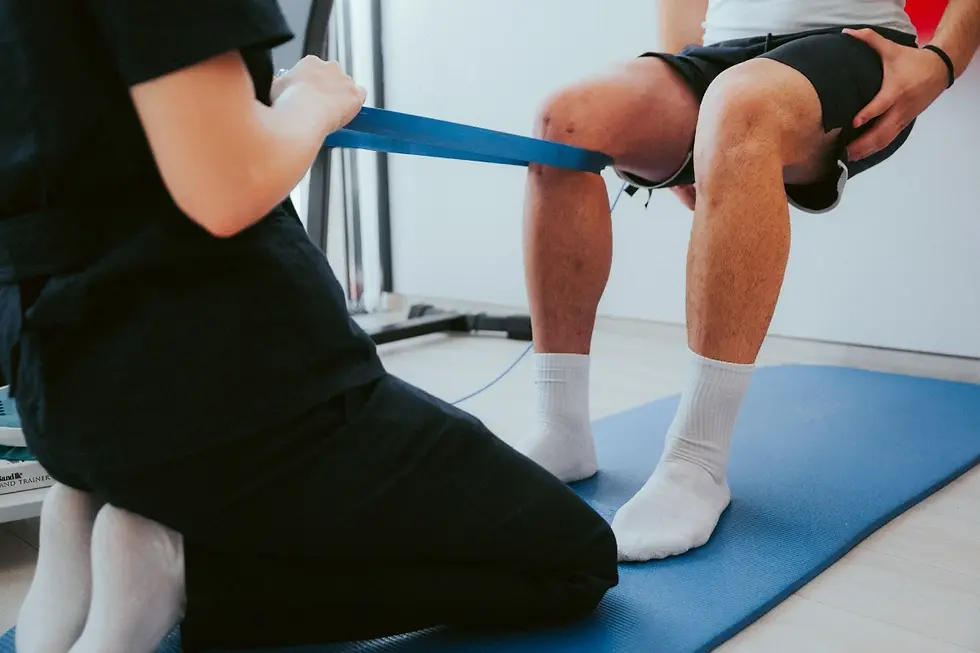
During assessment, your physiotherapist measures strength across key muscle groups: glutes, hip abductors and adductors, core stabilizers, calf muscles, and ankle stabilizers. More importantly, we identify asymmetries - the strength differences between left and right sides. For example, a runner with less glute strength on the left will unconsciously adjust gait, placing excess stress on the weaker side. These imbalances don't automatically cause pain, but they dramatically increase injury probability.
Common imbalances in runners include weak glutes and hip abductors, inadequate core stability, weak ankles, and tight hamstrings or calves. These issues frequently stem from modern lifestyle habits, like prolonged sitting, desk work, and sedentary routines, which can weaken or inhibit the muscles runners rely on.
Movement Pattern and Gait
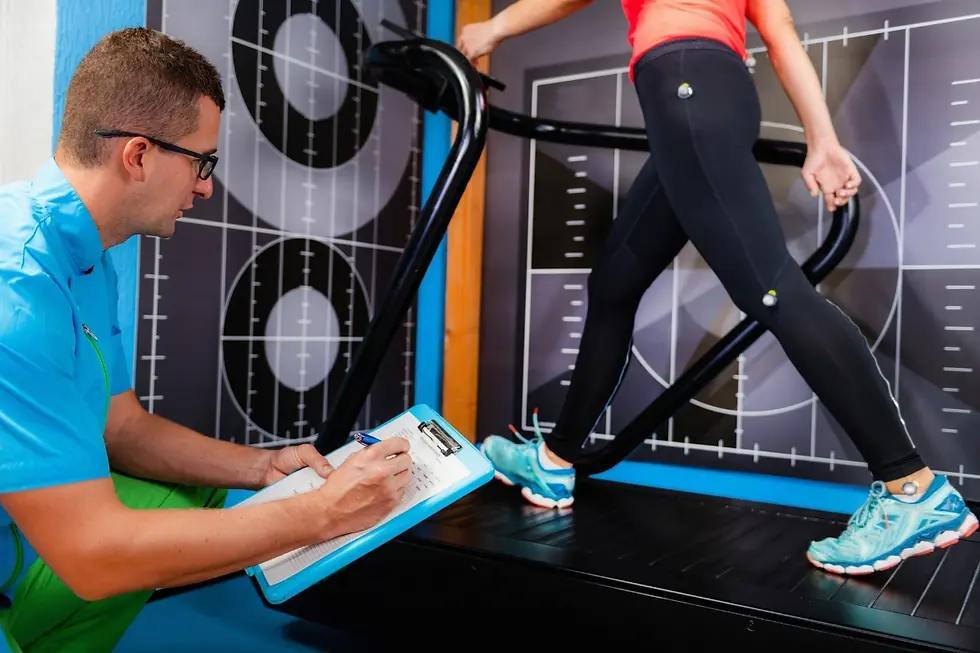
This is where home physio assesses your walking and running biomechanics. Rather than assuming all runners move identically, your physiotherapist videos your running gait from multiple angles (side, front, rear), then analyzes these factors in slow motion:
Foot strike pattern: Where does your foot contact the ground relative to your body? Overstriding (foot striking well ahead of your body) dramatically increases injury risk by creating braking forces instead of momentum.
Hip and knee alignment: Do your knees track directly over your toes, or do they collapse inward? Inward knee collapse indicates weak hip stabilizers and predicts runner's knee.
Stride length and cadence: Are your strides unnecessarily long or asymmetrical?
Pelvic stability: Does your pelvis remain level, or does it drop on the swing-leg side? Pelvic instability may suggest weak hip stabilizers and disrupts running efficiency.
Torso control: Does your trunk remain upright, or do you lean forward excessively? Does it rotate asymmetrically? Poor torso control increases injury risk and wastes energy.
Balance and proprioception: Standing on one leg or performing dynamic balance tests reveals whether your proprioceptive (body awareness) system functions optimally.
This comprehensive analysis often reveals that seemingly small inefficiencies can turn into significant injury risk.
Strength and Mobility Exercises in Home Physio for Runners
While many runners focus entirely on running distance, strength and mobility training is equally critical for both injury prevention and performance. Based on your assessment, your physiotherapist designs personalized home exercise programs targeting your specific weaknesses.
Hip and Glute Strengthening and Stability

The hip and glute area is the power center of running, yet many runners have surprisingly weak glutes. In a home physio session with Thrive Healthcare, our physiotherapists guide you through targeted resistance training for strength and stability, providing the foundation for efficient running and injury prevention:
Glute bridge progression: Starting with both legs to single-leg variants, this exercise reactivates the gluteus maximus, which is often inhibited by prolonged sitting.
Clamshells and banded lateral walks: These target the gluteus medius, the critical hip stabilizer preventing inward knee collapse.
Single-leg deadlifts and squats: These compound movements challenge glute strength and hip stability simultaneously while demanding core control and balance.
Fire hydrants and hip rotation exercises: These variations further strengthen hip abductors through different movements for comprehensive hip stability.
Core Strengthening and Neuromuscular Control

A strong core prevents the pelvic drop and rotational movements that create excessive stress on your joints. Beyond traditional crunches, effective functional training for your core includes:
Planks and variations: Front and side planks build your anterior core and lateral stabilizers. Progressive variations include single-leg lifts, marching patterns, and unstable surface versions, increasingly challenging neuromuscular control.
Dead bugs: This pattern teaches core control without stretching your spine.
Bird dogs: Single-leg balance combined with opposite-arm extension demands core stability while training proprioception.
Pallof press: Using resistance bands, this anti-rotation exercise builds side-to-side core stability, essential for maintaining spinal alignment during running.
Lower Limb Strengthening

During a home physio session with Thrive, you also undergo resistance training for your ankles, calves, and leg stabilizers:
Single-leg calf raises: These build ankle stability and calf strength, improving push-off power and reducing Achilles injury risk.
Wobble cushion or balance board work: Unstable surfaces often challenge your proprioception, making it important to train your responsiveness.
Quadriceps strengthening: Balanced quad work (squats, lunges, step-ups) supports knee stability when paired with glute work.
Soft Tissue Mobility and Flexibility

Tight muscles restrict your movement and increase injury risk. Your home physio will also include:
Dynamic stretching: Pre-run hip openers, leg swings, and controlled lunges prepare tissues for running demands.
Static stretching and mobilisation techniques: Post-run or dedicated sessions include extended stretches for hip flexors, hamstrings, calf muscles, and IT band, combined with foam rolling or massage techniques addressing muscle tightness.
Home Physio for Runners with Thrive Healthcare: Sports Physiotherapy Expertise and Support
Our approach to home physiotherapy for athletes combines evidence-based practices with practical expertise earned through working with numerous runners.
We conduct thorough evaluation of your running history, strength and mobility, and movement pattern for complete understanding of your unique situation. We identify your weaknesses and performance potential to build a personalised home exercise program.
Home exercises address your specific muscle imbalances, movement dysfunction, and performance goals. They are progressive, sustainable, and designed to ensure actual adherence. We provide detailed gait training including cadence optimization, foot strike pattern correction, and kinetic chain development, using both observational analysis and where appropriate, motion analysis technology.
We also work collaboratively with your running coach or training plan, ensuring resistance training and functional training complement rather than conflict with your running program. During your high-mileage running phases, home physio with us emphasizes maintenance strength and injury prevention. As running volume decreases and intensity increases toward race peaks, we shift toward power development and performance-specific work.
Physiotherapists at Thrive Healthcare continuously monitor your running metrics, including pace, effort, form, strength, and movement quality to adjust your home physio program. For runners training for marathons or competitive racing, we also support prehabilitation to prepare your body, build tolerance, and train fatigue.
Ready to Run Stronger and Injury-Free? Partner With Thrive Healthcare
Running should be a source of joy, health, and achievement, not a source of injury or frustration. With proper home physio for runners, you can train hard, race strong, and stay healthy for years of running enjoyment.
Contact Thrive Healthcare today for your comprehensive running assessment and let us help you achieve your running goals.


Comments